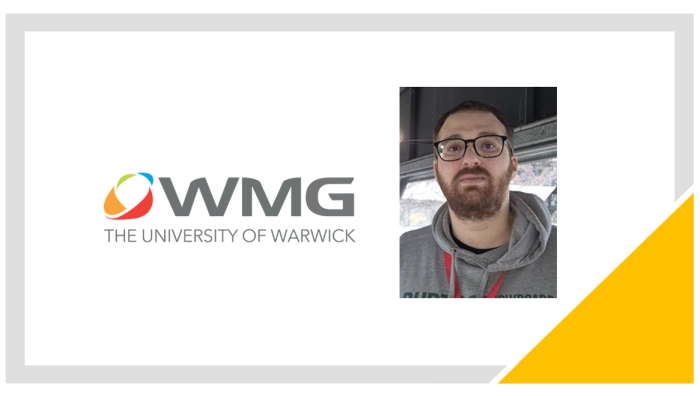
Luca Minnetti is a Research Fellow in Sodium-ion battery technology at WMG, University of Warwick (UK). He earned his PhD in Chemical Sciences in 2025 from University of Camerino (Italy), with a thesis focused on cathodes development and cell manufacturing for Li-ion and Na-ion batteries before joining WMG in the same year within the EPISODE project.
His research background includes a strong focus on synthesis and characterization of cathode materials for Li- and Na-ion batteries, with a particular focus on the dependence between structural, diffusional, and electrochemical properties, and the manufacturing/performance correlation for upscaling requirements. He brings his experience within the WMG team to support the upscaling challenges related to materials processability and cell manufacturing within the EPISODE project.
What was your original motivation to pursue a career in innovation, e.g., become a researcher/project manager?
When I began my studies in Chemistry, I was already fascinated by the world of scientific research. Understanding the chemical and physical behaviour of the materials I was studying, and the related challenges, has driven me to pursue this path to this day, with great satisfaction. Today, being part of the battery research community is a great reward, but also a further challenge to continue my journey, where collaboration and innovation are central requirements.
What is your (main) research area today?
Since joining the research group of Dr. Ivana Hasa in WMG, my research has focused on characterization of advanced materials and manufacturing process for sodium-ion batteries, with a particular emphasis on understanding and overcoming limitations related to upscaling requirements. As a chemist, my research is also focused on understanding material properties and correlating these with their processability into cell components and electrochemical response.
What is the main focus of you and your team in episode?
In EPISODE, as a member of the sodium-ion WMG team, we are leading Work Package 2, focused on “Materials, Electrodes, and Cells: Upscaled Process Development”. Our main focus on the identification and overcoming of the main challenges related to material processing for upscaling requirements, especially at the cathode side. The investigation of the physical-chemical properties of the materials is fundamental to assess the manufacturing/performance correlation with the aim to optimize the latter to meet the project’s KPIs.
From all your activities within the project, what are you the most proud of/keen of to share with the public?
Built a European supply chain for battery production is arguably one of the most significant challenge facing the energy transition today. In this regard, WMG’s work to bridge the gap between academic research and industrial innovation represent one of the most complex, yet highly rewarding, research challenges. I am excited by the prospect of sharing the outcomes of the EPISODE project with the wider community by contributing research results that are translatable into real-world impact, following the development of industrially relevant sodium-ion battery cell prototypes that meet the required specifications
How do you expect the episode results will impact your organisation and the battery sector in Europe?
I expect the outcomes of the EPISODE project to have a significant impact on the European battery sector by supporting the development of the next generation, sustainable, European sodium-ion battery production, thereby contributing to a faster energy transition. Within this context, WMG plays a central role through its collaborative and multidisciplinary approach, fostering the training and career development of battery researchers like me while effectively bridging the gap between academic discovery and industrial requirements of battery manufacturing.