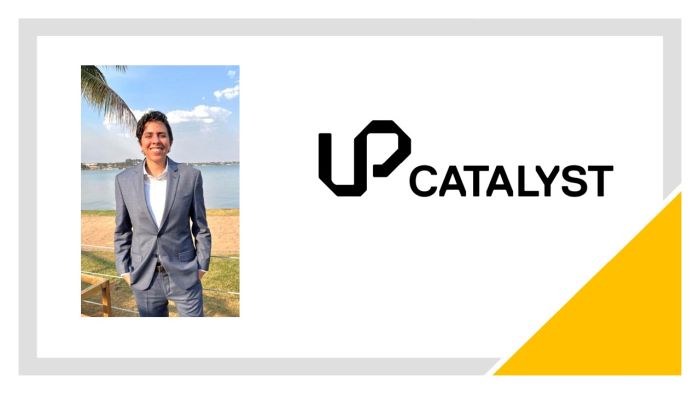
Hello, I am Larissa Santa-Cruz Oliveira, a Brazilian researcher passionate about sustainability and technology, driven by the belief that contemporary challenges must be addressed through environmentally responsible innovation.
What was your original motivation to pursue a career in innovation, e.g., become a researcher/project manager?
My primary motivation to become an electrochemist and project leader was to transfer technology from lab-scale to society in a responsible way. First, we look at our surroundings, then we create solutions for making people’s lives better. With a creative mindset, I am committed to advancing technological readiness (TRL) of breakthrough innovations while caring for our planet.
What is your (main) research area today?
I am an electrochemist by training. My main research area today focuses on the development of innovative and sustainable energy storage systems, particularly sodium-ion and lithium-ion batteries, supercapacitors, and eco-friendly electrolytes. I have ten published papers and two patents in energy sector. I work on advancing technologies from laboratory scale to real-world applications, always integrating sustainability principles into material design and device manufacturing.
What is the main focus of you and your team in Episode?
In the EPISODE project, my focus is the application of hard carbon materials as anode in sodium-ion batteries, performing electrochemical measurements, and analysing results to propose key improvements. Our primary goal is to enhance the anode’s initial coulombic efficiency and capacity retention, contributing to performance improvement enabling the commercial feasibility and competitiveness of the EU-sourced raw material based Na-ion cells and systems developed within the Episode project.
From all your activities within the project, what are you the most proud of/keen of to share with the public?
I’m most proud of the production of sustainable bio-based hard carbon at UP Catalyst and the high-quality electrochemical results achieved with the material application in sodium-ion batteries. I value how deeply the UP Catalyst’s team can analyse and interpret the energy storage devices’ performance, leading to insights that guide the team to proper improvements.
How do you expect the Episode results will impact your organisation and the battery sector in Europe?
I expect that the Episode’s results significantly impact UP Catalyst and the European battery sector by advancing the local battery raw materials production and the development of sodium-ion batteries. I believe that this project will lead to the application of innovative technologies in the contemporary society. On one hand, the sodium-ion batteries are a promising alternative to already established mature technologies dependent on critical raw materials. On the other hand, the manufacturing of sustainable raw materials for battery sector is urgent to offer strategic solution for the current energy and climate crisis. These results will contribute to the development of reliable, cost-effective, and sustainable technologies, which are crucial for Europe’s energy transition.