
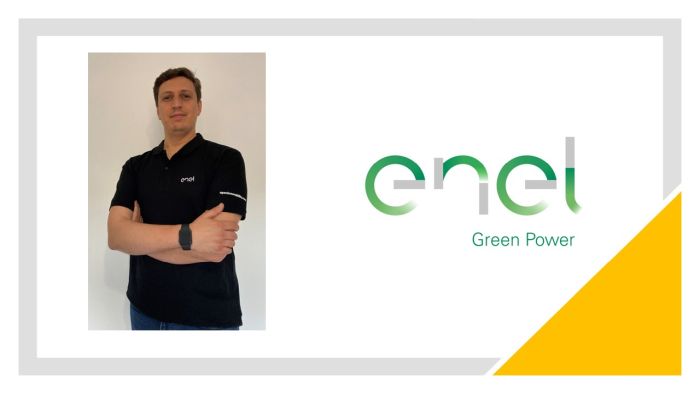
Fausto Bontempo Scavo is a Project Manager at Innovation Enel, with a PhD in Systems Engineering, Energy, Computer Science, and Telecommunications. He has gained solid experience in the field of renewable energy and has previously managed several EU-funded projects focused on innovative battery technologies. Within the EPISODE project, Fausto is responsible for coordinating all project activities on behalf of Enel Green Power. In particular, he will oversee the testing activities that will be conducted at the Enel Innovation Lab & Hub in Passo Martino, Catania, where a sodium battery prototype will be tested, and evaluated as a sustainable alternative to lithium-based technologies.
What was your original motivation to pursue a career in innovation, e.g., become a researcher/project manager?
I’ve always been fascinated by the potential of technology to address environmental challenges. This led me to pursue a career that allows me to combine research and practical implementation—contributing to real-world change, especially in the field of renewable energy and sustainable systems.
What is your (main) research area today?
My current focus is on new battery technologies, using approaches that reduce environmental impact while maintaining performance and safety standards.
What is the main focus of you and your team in Episode?
Our main focus is to carry out performance tests on the sodium battery prototype at the Enel Innovation Lab, contributing data that will validate its use as a viable alternative to lithium-based batteries.
From all your activities within the project, what are you the most proud of/keen of to share with the public?
I’m particularly proud of our work on generating test protocols for battery cycling that can demonstrate the potential of sodium batteries as a solid and sustainable alternative to lithium batteries.
How do you expect the Episode results will impact your organisation and the battery sector in Europe?
We expect that EPISODE’s outcomes will help position our organization at the forefront of sustainable battery innovation. More broadly, the project could significantly boost Europe’s capacity to implement sodium battery solutions, making the battery value chain more circular and resilient.