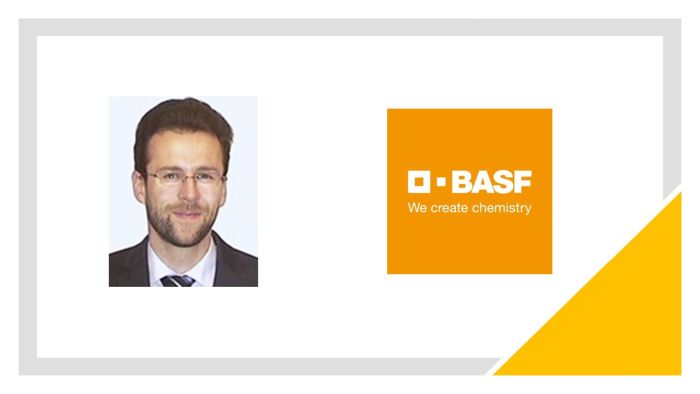
Holger Schneider holds a PhD in physical chemistry and joined BASF’s R&D department in Ludwigshafen, Germany, in 2011, working on next generation lithium batteries. Currently, he serves as Program Manager & Principal Scientist for Next Generation Battery Materials & Systems. His responsibilities include leading the next-generation cathode active materials (CAM) portfolio, identifying market opportunities, guiding technical development, and supporting commercialization efforts.
What was your original motivation to pursue a career in innovation, e.g., become a researcher/project manager?
After pursuing a PhD in physical chemistry working in fundamental science (laser spectroscopy of small anion clusters in the gas phase) I switched gear as postdoctoral fellow, when I joined the research group of Prof. P. Novak at the Paul Scherrer Institute in Switzerland working on lithium batteries. Joining the battery field in this transitional period has intrigued me ever since, both because the scientific work can be translated into a significant impact on important applications and for the fast-paced development, where new directions and battery systems gain traction in extremely short time periods.
What is your (main) research area today?
My research centers on advanced battery materials and systems, especially cathode active materials for next-generation batteries such as lithium-manganese-rich compounds, high-voltage spinels, lithium-manganese spinels, and materials for all-solid-state and sodium-ion batteries.
What is the main focus of you and your team in episode?
We provide the cathode active materials required to assemble the sodium-ion batteries of interest for the project work and support with any questions concerning their properties and performance.
From all your activities within the project, what are you the most proud of/keen of to share with the public?
I am glad that we are able to play a crucial role in the project by providing BASF’s state-of-the-art cathode active materials for sodium-ion batteries, thereby supporting cutting-edge research on next generation battery systems in the consortium and advancing this exciting and important new field towards a higher degree of maturity.
How do you expect the episode results will impact your organisation and the battery sector in Europe?
As we support the work performed in the framework of this project, this will also help us to gain important new insights. Most importantly, advancing the sodium-ion battery field towards higher TRL will accelerate the commercialization of these battery systems, in turn creating new business opportunities not only for us but all of the European battery value chain.