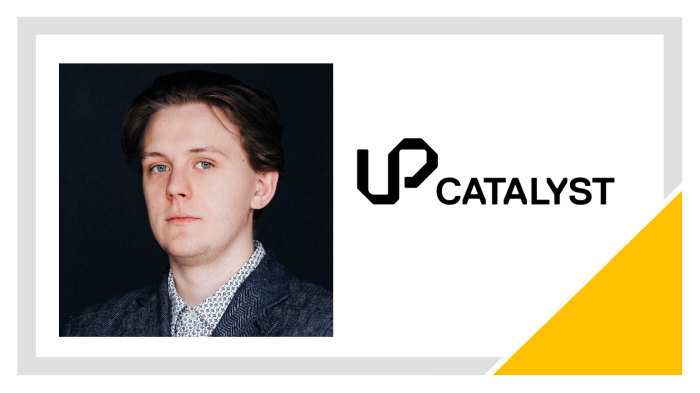
Kristofer Reinholm is the R&D lead for Hard Carbon production in UP Catalyst, with a master’s degree in environmental and chemical engineering from TalTech. He’s been with UP Catalyst from 2021, when he started as an internship in the summer.
What was your original motivation to pursue a career in innovation, e.g., become a researcher/project manager?
From early on I’ve liked chemistry, and I so focused on STEM area of study. I chose to go with chemical engineering to get the necessary knowledge to get a better understanding of how and why reactors and plants are built and designed the way they are.
What is your (main) research area today?
I am responsible for the whole hard carbon development and production process. Daily work focuses from optimizing synthesis parameters to milling and other post synthesis processes. My primary goal is to optimize the hard carbon production process to improve the materials properties, like initial coulombic efficiency and capacity retention for Na-ion batteries.
What is the main focus of you and your team in episode?
Me and the team focus on improving the Hard Carbon properties. That includes adjusting synthesis conditions and testing the resulting hard carbon materials. It is quite a complex topic as it contains so many influencing factors such as synthesis temperature and time but also milling time and conditions. And the testing conditions such as electrode preparation and test protocols will influence the results even further.
From all your activities within the project, what are you the most proud of/keen of to share with the public?
Our hard carbon is made from lignin, which is mostly a waste product, that is usually burned for heat. UP Catalyst uses that biopolymer and gives it a second life, by turning it into a raw material for different industries. And every gram of Hard Carbon that is sent out from UP Catalyst has passed through my hands, which means that I have prevented these valuable carbon atoms to be just burned for heat.
How do you expect the episode results will impact your organisation and the battery sector in Europe?
I expect that the project will show the feasibility and competitiveness of Na-ion batteries and that the European Union has potential to become a bigger player in the battery space with local supply chains. For UP Catalyst the project will put us more on the map as a critical raw material supplier for Na-ion batteries and hopefully bring more commercial and collaborative interest.