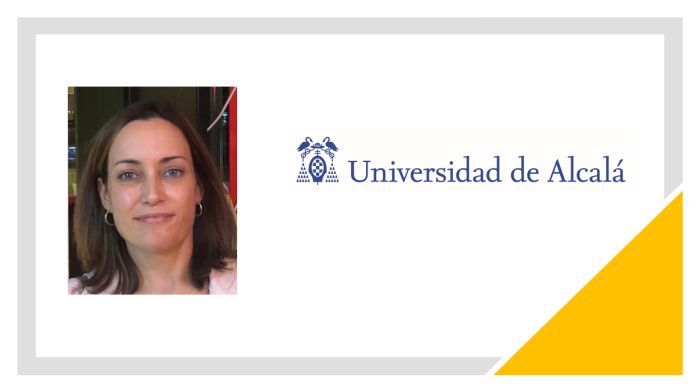
I received my PhD in Chemistry in 2013 from the Autonomous University of Madrid (Spain), where I focused on developing glass-ceramic materials with enhanced chemical and mechanical properties. Six years ago, I joined a small battery-recycling company, where I worked on circular-economy strategies and the recycling of different types of batteries. In 2022, I moved to the IMDEA Energy Institute, a research center in Madrid, where I began addressing battery sustainability from two complementary perspectives: the electrochemical recovery of critical raw materials (CRMs) and Life Cycle Assessment (LCA).
What was your original motivation to pursue a career in innovation, e.g., become a researcher/project manager?
My main motivation is my natural curiosity. After completing my PhD in Chemistry in 2013, I was unable to continue along the “typical” research path and spent the following five years working in the IT sector, where I already had prior experience. When the first opportunity to return to research appeared—this time in the battery-recycling sector—I seized it. Although it was not my area of expertise, I embraced the challenge in 2019 and stepped out of my comfort zone. The path has not been easy, but it has certainly been worth it.
What is your (main) research area today?
I joined the University of Alcalá in October 2025, where I am working as a Postdoctoral Researcher in the EPISODE project. My work focuses on the sustainability assessment of sodium-ion battery production, use phase, and end-of-life, in close collaboration with our partner, the Karlsruhe Institute of Technology.
What is the main focus of you and your team in Episode?
Ensure that batteries are developed in accordance with sustainability and circular-economy principles, following an integrated, life-cycle-driven approach that incorporates advanced economic, environmental, social, and ethical metrics. Guarantee the use of abundant, non-toxic, and inherently safe raw materials, while minimizing the impact of potential value-chain disruptions. Develop new tools and advanced methodologies for prospective assessments and create an open-data environment that facilitates the exchange of such information.
From all your activities within the project, what are you the most proud of/keen of to share with the public?
The ultimate goal of this project is to experimentally demonstrate the feasibility of a fully European sodium-ion battery value chain, so we will be proud to contribute by evaluating its sustainability, thereby strengthening and supporting the project’s outcomes.
How do you expect the Episode results will impact your organisation and the battery sector in Europe?
At the university, we aim to consolidate the research line focused on sustainability in energy systems and to extend it, as a multidisciplinary field, to other areas of study.
Regarding the battery sector, we hope that the results of this project will catalyse the development of a disruptive, sustainable, and self-sufficient energy storage technology within Europe.